Guide
Shopping ads around AI Overviews: how they appear
How Shopping ads reach Google results pages with an AI Overview, what 1,561 listings on 64 US pages showed in Oct 2026, and the feed steps that follow.
By the AI Overview Ad Library team · Published · Updated · 7 min read
In short
- Shopping ads are matched from Merchant Center product data, not keywords, and Google makes them eligible above, below and, for English searches in 12 countries, inside an AI Overview.
- In our capture (Oct 10–11, 2026, US searches), product listings were 1,561 of 1,917 ads and filled the top of the page: 895 of the 991 ads above the AI Overview.
- Almost all listings (1,500 of 1,561) came from our ad capture, searches run in a browser, where the ads on the page are recorded; it ran only short searches. The other 61 came from our answer capture, a second set of searches that recorded the AI answer and the sources it linked, but picked up ads on few of them (29 of 379).
- A store’s listing and its text ad often ran together: on 24 pages the same advertiser had both, which Google’s help page allows.
- 64 listings opened with a sale tag such as “10% off” or “Sale”. Google says sale annotations depend on feed data and may not appear even when the requirements are met.
On this page · 9 sections
How Shopping ads reach these pages
Shopping ads show “a product photo, title, price, store name, and more.” They are not triggered by keywords: Google says they use “your existing Merchant Center product data” to decide which searches they appear on. They run from Shopping campaigns or Performance Max, and on a results page they appear next to the search results, separate from text ads. Google also says a store can have more than one Shopping ad on a search and that “a Shopping ad and a text ad can also appear at the same time.” Since October 2025 they carry a “Sponsored products” label.
AI Overviews add no new campaign. Existing Shopping ads are eligible above and below an AI Overview in every market that has one, and inside it for English searches in Australia, Canada, India, Indonesia, Kenya, Malaysia, New Zealand, Nigeria, Pakistan, the Philippines, Singapore and the US. Google’s one piece of placement advice for retailers is to make sure “feeds are kept up to date with the latest product information.”
Two newer products point the same way. AI Max for Shopping, announced on April 30, 2026 and still labelled a beta in Google Ads Help, can rewrite product titles to match the search (English feeds only), expand to other landing pages with a Target ROAS bid strategy, and choose between a text ad and a Shopping ad for each search; Google’s help page says it is built for newer search experiences such as AI Overview and AI Mode. On May 20, 2026 Google announced AI-powered Shopping ads, in which Gemini will “pull up your most relevant products and instantly write a custom explainer”. We did not see that format in this capture.
Where the listings sat
We ran 528 signed-out Google searches from US connections on Oct 10–11, 2026. 64 of the 138 results pages with ads carried product listings: 1,561 listings from 490 named stores, plus 3 with no store name we could read. Almost all of them, 1,500, came from our ad capture: searches run in a browser, where the ads on the page are recorded. It ran only short product and keyword searches. The other 61 came from our answer capture, a second set of searches that recorded the AI answer and the sources it linked, but picked up ads on few of them (29 of 379).
| Where the page came from | Pages with listings | Listings | Above | Below | Not placed |
|---|---|---|---|---|---|
| Ad capture: short product searches | 50 | 1,465 | 886 | 280 | 299 |
| Ad capture: keyword searches | 5 | 35 | 0 | 10 | 25 |
| Answer capture: one short product search | 1 | 13 | 0 | 13 | 0 |
| Answer capture: longer questions | 8 | 48 | 9 | 39 | 0 |
| All | 64 | 1,561 | 895 | 342 | 324 |
Above the AI Overview, listings came in carousels. 32 pages had a block there, with a median of 33.5 listings, and 13 of those blocks held 39, the most we recorded in one block. Below, blocks were usually small (median 7), though yoga mat and pickleball paddle set each had 39 there. Yoga mat is the clearest case of a full block below: 39 listings, all under the AI Overview, from Manduka, lululemon, Yoloha Yoga and 10 other stores, priced from $3.06 at Temu to $165 at Liforme. A page with listings had a median of 22 of them from 9 stores. For prices and the largest stores, see retail product ads around AI Overviews.
Listings recorded on longer questions
The answer capture picked up listings on 9 pages, 61 in all, and 52 of those sat below the AI Overview. Eight of the pages were longer questions, 48 listings between them, and there the listings matched the question closely rather than the category:
- Is BarkBox worth it if my dog destroys plush toys in a day: six BARK listings below the AI Overview, five of them “Super Chewer” boxes of tough toys, at $27 to $29.
- What computer do I need for video editing: six computers below, from $979.99 at Staples to $2,599.99 at Dell, next to Apple’s text ads, “Switch to Mac”.
- Nitro PDF Pro price 2026: five license listings below from resellers such as Nerdused, Meev and Kinguin, at $29.45 to $120, alongside a text ad from Nitro itself (gonitro.com).
The exception was best blonde box dye that isn’t brassy: nine listings above the AI Overview from Madison Reed, CVS Pharmacy and Target, then a Madison Reed text ad below. The ninth page was a short search, mens fragrance, whose 13 listings sat below the AI Overview too. Longer questions ran in no other capture, so this data cannot tell whether they push listings down or the answer capture recorded pages differently. More in long questions and ads.
Brand stores, retailers and resellers in one block
Because each store’s listing is its own ad, a brand’s official store often shares the block with the retailers that stock it. On 20 occasions, two or more stores listed a product under the same title on one page. Three searches show the mix:
- Sun Joe SPX3000: 14 listings above the AI Overview from 12 stores. The brand’s own store, Snow Joe + Sun Joe, listed the SPX3000 at $169, the same price as Target, while Bass Pro Shops and Cabela’s asked $169.99 and an eBay seller $83.30. The only text ad, from Shop Joe, sat below.
- Specialized Turbo Vado: Specialized had five listings above, from $2,449.99 to $6,399.99, beside bike shops such as N+1 Bikes and a rival e-bike from Aventon at $1,999. Specialized’s text ad sat below.
- Crew socks: Bombas had eight listings above the AI Overview, eight more below, and a text ad below, “Upgrade Your Sock Drawer | The Best Cotton Socks”.
That last pattern was common. On 26 of the 64 pages with listings, the same advertiser ran both a listing and a text ad, from Corelle on corelle dishes to Sonos on dolby atmos soundbar. In all, 42 of the 64 pages with listings also had text ads.
Sale tags and other labels
64 listings (4%), on 17 pages, opened with a sale label: “Sale” on 20 and a percentage off on 44, most often “10% off” (19) and “20% off” (9). Of those we could place, 25 sat above the AI Overview and 7 below. Star ratings were rare in our records, readable on 14 of the 1,561 listings.
Merchant Center controls where such labels come from, but not whether they show. For the sale_price attribute, Google says the sale price “is shown as the current price”, that “a sale price annotation may also be added”, and that annotations “may not always appear, even if the requirements are met.” Promotions submitted through Merchant Center can appear on Search, Shopping ads and free listings in the US and 12 other countries. Google’s automated discounts, which a retailer can switch on in Merchant Center, can also lower a listing’s price in Shopping ads. We cannot tell which of these produced each label we saw.
Steps for retailers
- Treat the feed as the targeting. Titles, prices, availability and images in your product feed decide which searches you match. Keep them current, as Google advises for this placement.
- Price sales properly. Use sale_price with a lower regular price, and show both on the landing page and only the sale price at checkout, as Merchant Center requires. Expect the annotation to appear only some of the time.
- Submit promotions. A promotion needs at least an ID, a title of up to 60 characters, start and end dates, the products it covers, whether a code is needed, whether it is online or in store, and where it should show, such as Shopping ads or free listings.
- Pair listings with a text ad on your own names. Brands like Bombas and Corelle held both formats on their searches; where a brand did not advertise, rival listings and resellers filled the space.
- Check who lists your products. Resellers and retailers appeared beside brand stores at different prices. Search your products signed out, or use the brand check and the product listing examples.
- Use the AI view Merchant Center gives you. AI performance insights compare your store’s visibility with competitors’ on conversational shopping searches that trigger AI Overviews or AI Mode (English queries; accounts in the US, Canada, Australia, India and New Zealand). It covers free listings, not ads, so it shows the organic side of the same pages.
Examples from the library
4 of the ads on searches this guide links to, in our capture (Oct 10–11, 2026, US searches). Each card shows the search that brought it.
 Yoloha YogaSponsored
World's First Cork Yoga Mat
The highest quality and performing natural cork yoga products on the market.
 apple.comSponsored
Switch to Mac - Apple Computers Built for AI
MacBook Pro, MacBook Air, MacBook Neo, Mac mini, iMac, and Mac Studio. Explore the lineup.
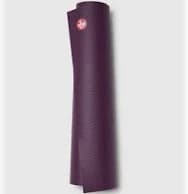 $112Product
PRO Lite Yoga Mat 4.7mm Indulge (Purple) / Standard 71" (180cm)
Below the AI Overview
Searched for
Sports, Outdoor & FitnessOct 10, 2026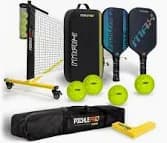 $189.95Product
PicklePro Max Pro Pickleball Net Set | Net & Paddles
Above the AI Overview
Searched for
Sports, Outdoor & FitnessOct 11, 2026


Questions and answers
Do Shopping ads appear in Google AI Overviews?
Google says Shopping ads are eligible inside AI Overviews for English searches in 12 countries, including the US, and above or below them everywhere. Our Oct 10–11, 2026 US capture files every listing we could place as above or below the start of the AI Overview; an inside position is not recorded.
Do I need a special campaign for Shopping ads in AI Overviews?
No. Existing Shopping and Performance Max campaigns with a Merchant Center feed are eligible. AI Max for Shopping, announced in April 2026 and labelled a beta in Google Ads Help, is optional and adds title rewriting.
Are Shopping ads above or below the AI Overview?
Mostly above: 895 of the 1,237 listings we could place (72%). In our answer capture it was the reverse, with 52 of 61 listings below, on a short search as well as on longer questions.
Can a Shopping ad and a text ad from the same store appear together?
Yes. Google’s help page says they can, and on 24 of 64 pages with listings in our capture the same advertiser had both.
Why do some listings show “10% off” or “Sale”?
Most likely from Merchant Center data: a sale price in the feed, a promotion, or Google’s automated discounts. Google says sale annotations may not always appear even when the requirements are met. 64 of 1,561 listings in our capture carried one.
Sources
- About Shopping ads – Google Ads Helpsupport.google.com
- About ads and AI Overviews – Google Ads Helpsupport.google.com
- We’re improving navigation and introducing a new control for ads on Google Searchblog.google · Oct 13, 2025
- Adapt your Shopping campaigns to modern Search with AI Maxblog.google · Apr 30, 2026
- About AI Max for Shopping campaigns (beta) – Google Ads Helpsupport.google.com
- A new generation of ads for the AI era of Searchblog.google · May 20, 2026
- Sale price [sale_price] – Google Merchant Center Helpsupport.google.com
- Promotions data specification – Google Merchant Center Helpsupport.google.com
- About sale price annotations – Google Merchant Center Helpsupport.google.com
- About automated discounts – Google Merchant Center Helpsupport.google.com
- About AI performance insights – Google Merchant Center Helpsupport.google.com
Figures from the library are in our capture (Oct 10–11, 2026, US searches) and describe what we observed, not Google’s full ad inventory. See how the ads are captured. AI Overview Ad Library is independent and not affiliated with Google.