Analysis
Comparison searches and ads around AI Overviews
All 46 “X vs Y” searches we ran showed an AI Overview. Their ad rate was not measured: who advertised on two of them, what got cited, and how to compete.
By the AI Overview Ad Library team · Published · Updated · 7 min read
In short
- Every one of the 46 comparison searches in our capture (Oct 10–11, 2026, US searches) showed an AI Overview.
- All 46 ran only in our answer capture, a second set of searches that recorded the AI answer and the sources it linked, but picked up ads on few of them (29 of 379), so how often comparisons show ads was not measured.
- It picked up ads on two comparisons, and on both one of the two brands being compared was among the advertisers: Palo Alto Networks on CloudGuard vs Prisma Cloud, Feetures on Bombas vs Feetures.
- The AI Overview did the comparing with other people’s pages: 31 of the 43 that linked sources cited a head-to-head comparison, five times one written by a brand being compared.
- Google says AI Overviews appear on complex questions advertisers are less likely to target as keywords, and requires broad match or keywordless matching (AI Max, Performance Max, Shopping or Dynamic Search Ads) for ads inside them.
On this page · 9 sections
What a comparison search is
A comparison query names two or more options and asks which is better, or asks for alternatives to one. In our question set they ranged from calphalon vs cuisinart cookware and spectrum tv vs youtube tv to longer ones such as zen planner vs spark membership for a martial arts school. We searched 46 of them across all 20 industries; the median was six words.
These are exactly the searches AI Overviews are built for. Google’s help page for advertisers says AI Overviews trigger on queries that are generally “no one right answer” queries, and in our capture all 46 comparisons showed one. Seer Interactive’s April 2026 study, across 30,842 tracked informational queries, found comparison queries showed an AI Overview 95.4% of the time (267 of 280).
Google also says advertisers are less likely to target such keywords. That is why it asks for broad match on Search or the keywordless matching in AI Max for Search, Performance Max, Shopping or Dynamic Search Ads to reach them, and why both the search and the content of the AI Overview are considered when an ad is chosen to show inside it.
Why we have no ad rate for comparisons
Our searches ran through two captures. The ad capture is searches run in a browser, where the ads on the page are recorded; it held only short product and keyword searches, and 111 of its 149 searches showed ads (74%). The answer capture is a second set of searches that recorded the AI answer and the sources it linked, but picked up ads on few of them (29 of 379). Every comparison ran only in the answer capture, so their ad rate was not measured.
Eleven keyword searches ran in both captures, between 9 and 74 minutes apart, and 8 showed ads in the ad capture against 1 in the answer capture, so a search with no ads recorded in the answer capture is not evidence that Google shows none. The answer capture picked up ads on two comparisons. That is a count of what it recorded, nothing more. Our sister AI Mode library also ran its 45 comparisons only in its answer capture, so it has no ad rate for them either.
The two comparisons with ads recorded
check point cloudguard vs prisma cloud. The AI Overview set out how the two cloud security platforms differ. Four text ads sat above it: Akamai, Upwind, Palo Alto Networks, whose Prisma Cloud was one of the two products named, and Field Effect. Akamai appeared again below, with Isovalent. No Check Point ad was recorded. Palo Alto’s ad did not argue the comparison; it offered a “Free CASB Dummies Guide”. Field Effect’s did: “New MDR Quadrant Report”, promising to “Compare Ratings of 30 MDRs”. The page sits in the cloud security posture niche.
is bombas or feetures better for runners with sweaty feet. The AI Overview gave a verdict: “Feetures is generally better than Bombas for runners with sweaty feet”. Below it sat three product listings: a Balega three-pack at $48.45, Feetures socks sold by Christy Sports at $5, and a pair from Feetures at $13.30. No Bombas ad was recorded here, though Bombas did run a text ad on the short search crew socks in the ad capture.
Two pages make a small sample, but both show the same thing: on a comparison, the ad slots are not reserved for the two names in the question. A rival vendor, a reseller and a third brand all got in.
Comparison wording outside comparison searches
Comparison intent also turns up in questions of other types, and the answer capture picked up ads on some of them. how to choose between hybrid and memory foam had 11, all below the AI Overview: DreamCloud Sleep with “Compare Hybrid vs Memory Foam”, Nectar Sleep with “Nectar Side by Side Comparison”, review ads from Sleepopolis and Forbes, then six mattress listings from $1,049 to $3,799. On is polarized worth it for everyday driving and walking around town, the only ad recorded was Warby Parker’s “Polarized vs. Non-Polarized Sunglasses”.
Short searches that imply a switch or a price check showed the same habit in the ad capture. On concur alternatives, Rippling sat above the AI Overview and Ramp (“Compare Ramp | Make The Switch”) and Navan below; SAP Concur had no ad. On google hotels, trivago ran two “Hotel Price Comparison” ads below the AI Overview.
Across all 356 text ads in the library, 34 used the words compare, comparison or vs, from 25 advertisers on 26 searches. Many came from review and ranking sites rather than the brands themselves: Forbes, Top10.com, work-management.org and Top 10 Car Warranties. If you sell the product, the comparison ad you are up against may be a publisher’s.
What the AI Overview cites
43 of the 46 comparisons came back with linked sources, and they lean on opinion and side-by-side pages. Reddit was linked in 29 (67%) and YouTube in 33 (77%). In 31, at least one link was a page written as a head-to-head comparison or an alternatives list, from vendors, dealers, niche review sites and software directories.
On five comparisons, a brand being compared was cited for its own comparison page: Feetures, with “Feetures vs. Bombas: Which Sock Is Better for Running?”; Kit and MailerLite, each with a “Kit vs MailerLite” page; WeatherTech, with “WeatherTech Floor Mats vs. Toyota” on oem toyota all weather mats vs weathertech for a rav4; Zen Planner and Spark Membership on their martial arts software comparison; and JetBrains’ “TeamCity vs. Jenkins” on teamcity vs jenkins comparison. Dealers did the same for cars: at least three Ford dealers and a Chevrolet dealer were linked on ford explorer vs chevy traverse.
Google’s guide to generative AI features favours what it calls non-commodity content, such as first-hand reviews over summaries of what others have said, which fits an honest side-by-side page better than a generic one. Our ad capture recorded no cited sources, and our answer capture recorded ads on only 29 of its 379 searches, so this data cannot show how often a cited source and an ad appear on the same search. More on citations is in sources cited in AI Overviews.
How to compete on comparison searches
- Reach them without exact keywords. People phrase comparisons in endless ways. Google says broad match, AI Max for Search and Performance Max are how ads reach these AI Overview searches, so check that your comparison themes are covered by one of them.
- Read the search terms report, but expect gaps. Google says it lists search terms used by “a significant number of people”; search terms insights fold low-volume searches into themes without showing them. One-off comparisons may never appear, so sample them yourself on our question pages.
- Write the ad as the next step. The AI Overview has already compared features. Ads here that gave something extra, such as Feetures’ $13.30 price or Field Effect’s ratings report, added information the summary did not have.
- Know the trademark rules. Google’s trademark policy does not restrict using a trademark as a keyword. After a complaint from the owner, it can restrict a direct competitor’s use of the trademark in ad text, so rivals may bid on your name even where they cannot print it.
- Publish an honest comparison page. Brands were cited for their own comparison pages on five of these searches. Make yours specific, with prices, test results and who each option suits, and keep it current.
- Watch your own comparisons. Run your brand and your rivals through the brand check and sign up for alerts to hear when a new edition records ads on them.
Examples from the library
4 of the ads on searches this guide links to, in our capture (Oct 10–11, 2026, US searches). Each card shows the search that brought it.
 akamai.comSponsored
Akamai keeps employees safe across SaaS, web, and GenAI tools - no deployment friction.
BombasSponsored
Upgrade Your Sock Drawer | The Best Cotton Socks
The most comfortable Socks in history of feet. Cotton Socks designed to last and make every type...
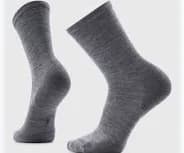 $24Product
Smartwool Everyday Solid Rib Crew Socks in Medium Gray | Size: Large
Above the AI Overview
Searched for
Fashion & FootwearOct 11, 2026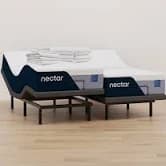 $2,496.00Product
Adjustable Bed Bundle Size Split King by Nectar | Compare the Mattress Set, Frame, Pillows, and Sheets to Sleep Number, Saatva, and Purple
Below the AI Overview
Searched for
Home & FurnitureOct 10, 2026

Questions and answers
Do “X vs Y” searches show ads around AI Overviews?
Some do, but our data cannot say how often. All 46 comparison searches in our Oct 10–11, 2026 capture showed an AI Overview. They ran only in our answer capture, which picked up ads on 2 of them and on 29 of its 379 searches overall, so their ad rate was not measured.
Who advertises on comparison searches?
Not only the two brands named. On check point cloudguard vs prisma cloud, Palo Alto Networks advertised beside three other security vendors; on bombas vs feetures, Feetures, a retailer selling Feetures and a third sock brand did.
Can a competitor bid on my brand name?
Yes. Google’s trademark policy does not restrict trademarks as keywords. It can restrict a direct competitor’s use of your trademark in the ad text after you file a complaint.
What do AI Overviews cite on comparison searches?
Forums, video and comparison pages. Reddit was linked in 67% and YouTube in 77% of the 43 comparisons with sources, and 31 linked a head-to-head comparison page.
Sources
- About ads and AI Overviews – Google Ads Helpsupport.google.com
- AIO impact on Google CTR: 2026 update – Seer Interactiveseerinteractive.com · Apr 24, 2026
- Trademarks – Advertising Policies Helpsupport.google.com
- About the search terms report – Google Ads Helpsupport.google.com
- Optimizing your website for generative AI features on Google Search – Google Search Centraldevelopers.google.com · Jul 10, 2026
- Methodology – AI Overview Ad Libraryaioverviewadlibrary.com
Figures from the library are in our capture (Oct 10–11, 2026, US searches) and describe what we observed, not Google’s full ad inventory. See how the ads are captured. AI Overview Ad Library is independent and not affiliated with Google.