Playbook
How to monitor competitor ads in AI Overviews
On at least 11 brand searches in our Oct 2026 capture, rivals advertised and no ad from the brand was recorded. Tools, real examples and a watch routine.
By the AI Overview Ad Library team · Published · Updated · 7 min read
In short
- In our capture (Oct 10–11, 2026, US searches) we found at least 11 searches for a named brand where rivals advertised next to the AI Overview and no ad from the brand itself was recorded.
- Rivals often held both positions: Bowflex on nordictrack treadmill, Automox on nessus professional and it’s worth more on decluttr phone each had ads above and below the AI Overview.
- Several rivals used the brand’s name in their own copy, such as Resume Genius’s “Zety Resume Builder Review” and Cruises.com’s “Save Big On Virgin Voyages”.
- The Ads Transparency Center is the place for a rival’s creative history, filtered by date and region; nothing in its help pages ties an ad to the query that triggered it or to its spot beside an AI Overview.
- A useful routine combines three views: the Transparency Center for creative, auction insights for your own auctions, and a dated outside capture for the page itself.
On this page · 8 sections
Why AI Overview pages need their own watch
A results page with an AI Overview has three possible ad positions: above it, below it and, in English in 12 countries, within it. Google decides which an ad gets using “existing signals and systems”. You can’t target or opt out of the placement within AI Overviews, so neither you nor a rival chooses to be there. What a rival can choose is to bid on your name. Google’s trademark policy does not restrict using trademarks as keywords; after a complaint from the owner, it can restrict a direct competitor’s use of the trademark in the ad text, and use that is confusing or misleading.
That makes brand searches the first place to look. On at least 11 searches for a named brand or product in our capture, rivals advertised next to the AI Overview and no ad from the brand was recorded, among them tovala, breachlock, udio and lightstream loan. On others, the brand held one or both positions and rivals took the rest. Brand searches are short, and short searches are what our ad capture ran: searches run in a browser, where the ads on the page are recorded. 111 of its 149 searches showed ads.
Three views, and what each misses
| Ads Transparency Center | Auction insights | This library | |
|---|---|---|---|
| What it covers | Ads an advertiser has run on Search, Display, Gmail and YouTube | Advertisers in the same auctions as your campaigns | Ads on US results pages with an AI Overview, as captured |
| How you search | Advertiser or website name, filtered by date and targeted location | Your keywords, ad groups or campaigns | Question, advertiser, industry or domain |
| The search behind the ad | Not described in its help pages | Your own terms only | Yes, on every ad |
| Above or below the AI Overview | Not described | No | Yes, where the page could be matched |
| Who else was on the page | No | Rates such as overlap and position above | Yes, every ad in order |
| Limits | Targeting details and recipient counts only for some regions | No insights when impression share is under 10% | One dated sample, signed out, US only |
Google describes the Ads Transparency Center as a searchable repository of advertisers and the ads they have served. Its 2023 launch post says you can see the ads an advertiser has run, which ran in a given region, the last date each ran and its format. Advertisers that completed verification are labelled as verified and shown under their legal or trademark name. It is the right tool for a rival’s full creative history. Auction insights shows, for your own Search campaigns, how often rivals overlap with you and appear above you, and their top and absolute top of page rates. Neither tells you that the auction was on a page with an AI Overview, or which side of it the ad landed.
What rivals did on brand searches
Seven of the eight pages below come from the ad capture. The eighth, nordictrack treadmill, was recorded by our answer capture, a second set of searches that recorded the AI answer and the sources it linked, but picked up ads on few of them (29 of 379). For that page a missing brand ad means only that none was recorded.
| Search | Rivals around the AI Overview | The brand’s own ad |
|---|---|---|
| nordictrack treadmill | Bowflex above and below; Treadmill Outlet below | None recorded |
| tovala | Text ads from Home Chef and Factor75, plus six product listings | None |
| nessus professional | Automox above and below; Invicti above | None from Tenable |
| decluttr phone | it’s worth more above and below | None |
| cit money market | E*TRADE above; WECU and EverBank below | None from CIT |
| zety | Resume Genius and My Perfect Resume below, with review-style ads | Zety above |
| virgin voyages | Cruises.com and Cheap Cruises below | Virgin Voyages above |
| webflow | DreamHost above; Wix below | Webflow above and below |
Four habits show up across these pages. Rivals hold both sides. Bowflex, Automox, it’s worth more and Astra, on breachlock, each had an ad above and another below the same AI Overview, so a brand searcher met them twice. Copy borrows the brand. Resume Genius ran “Zety Resume Builder Review” and My Perfect Resume “Zety Resume Templates and Features”; Cruises.com offered “Save Big On Virgin Voyages” and Cheap Cruises “Cheap Virgin Voyages”. Google’s trademark policy treats these cases differently: it does not restrict an ad whose landing page mainly sells the trademarked product or gives informative details about it, which covers many resellers and review pages, while a direct competitor’s use can be restricted after a complaint.
Publishers compete too. On lightstream loan, BHG Financial and SoFi sat above the AI Overview and a “LightStream Personal Loan Review 2026” ad from The College Investor below; LightStream had none. Forbes ran text ads on six pages in the library. Defenders vary their copy. When a brand held both positions it rarely repeated itself: Webflow’s ad above read “Fast Builds, Enterprise Scale” and the one below “Build Your Revenue Engine”, and Automox switched from “Start A Free Trial” to “15 Day Free Trial”. Across the library an advertiser had text ads above and below the same AI Overview 51 times, with different copy in 47.
One more signal is worth tracking separately: whether the brand is cited in the AI Overview. Our ad capture recorded no cited sources, and our answer capture recorded ads on only 29 of its 379 searches, so this data cannot show how often a cited source and an ad appear on the same search. Sources cited in AI Overviews shows who gets cited.
A monitoring routine
- List the searches that matter. Your brand, your products, “alternatives” and “vs” searches for your brand, and your main category terms. Our comparison guide shows why the last two behave differently.
- Check the library first. Put your brand and each rival into the brand check. Each advertiser page lists that advertiser’s ads, the questions they ran on and the rivals that shared those pages, such as Bowflex.
- Read the pages, not just the names. Question pages show every ad we recorded in order with its position, plus the start of the AI Overview and, where the answer capture ran the search, its links. Sub-niche pages such as treadmills group related questions.
- Pull the creative history. For each rival you find, search the Ads Transparency Center by name or domain and filter to your region and recent dates to see what else it is running and when each ad last ran.
- Compare with your own auctions. In auction insights, look for the same names in overlap rate and position above rate on your brand and category keywords.
- Export and date it. Each industry report offers the ads as a CSV. Save it with the capture date so the next edition can be compared like for like.
- Decide what to act on. Under Google’s policy a rival may bid on your name as a keyword; your options are to defend the position with your own ads and a better offer, or, if a direct competitor uses your trademark in its ad text, or anyone uses it in a confusing or misleading way, to file a trademark complaint with Google.
- Repeat on a schedule. Sign up for alerts and recheck when a new edition lands.
Limits of any outside view
- One snapshot. 528 signed-out US searches over Oct 10–11, 2026, on a question list we wrote, most run once, so treat every count as a floor.
- Captures differ. Our searches ran through two captures, and the same search could differ sharply between them: cordless drill showed 10 ads in the ad capture and none 19 minutes later in the answer capture. A rival missing from one capture may still be bidding.
- Location shows through. On are emergency plumbers worth the extra cost, all five ads named El Segundo. What you see depends on where the search comes from.
- No spend, no clicks. Neither this library nor the Ads Transparency Center shows spend, bids or clicks for commercial ads, and we never click ads.
Examples from the library
4 of the ads on searches this guide links to, in our capture (Oct 10–11, 2026, US searches). Each card shows the search that brought it.
 Home ChefSponsored
Home Chef® Family Menu | Delivered To Your Door
Delicious, easy dinners are just a delivery away. Limited time only.
- getastra.comSponsored
Online Penetration Testing — Manage Vulnerabilities and Remediation from One Interactive Pentest Dashboard.
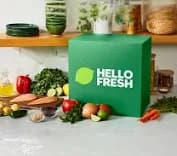 $59.96Product
HelloFresh Meal Kit - Two Meals for Two People Per Week
Above the AI Overview
Searched for
Food & GroceryOct 11, 2026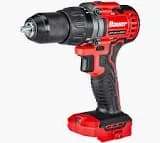 $39.99Product
Bauer 20V Brushless Cordless, 1/2 in. Drill/driver - Tool Only
Searched for
Home ImprovementOct 10, 2026


Questions and answers
Can I see which competitor ads appear next to AI Overviews in Google Ads?
Not directly. Auction insights shows how rivals compete in your auctions, and Google offers no segmented reporting for ads within AI Overviews. An outside capture such as this library records which ads sat above or below an AI Overview.
Does the Ads Transparency Center show the search that triggered an ad?
No. You look an advertiser up by name or website and narrow by date and location; the help pages say nothing about showing the query behind an ad or where it sat on the results page.
Can a competitor bid on my brand name?
Yes. Google’s trademark policy does not restrict trademarks as keywords. It can restrict a direct competitor’s use of your trademark in ad text after you file a complaint.
How often do rivals advertise on brand searches with an AI Overview?
Often enough to check. In our Oct 10–11, 2026 capture we found at least 11 brand searches where rivals advertised and no ad from the brand was recorded, including tovala, lightstream loan and decluttr phone.
Sources
- Ads transparency – Advertising Policies Helpsupport.google.com
- Announcing the launch of the new Ads Transparency Centerblog.google · Mar 29, 2023
- Use auction insights to compare performance – Google Ads Helpsupport.google.com
- Trademarks – Advertising Policies Helpsupport.google.com
- About ads and AI Overviews – Google Ads Helpsupport.google.com
- Methodology – AI Overview Ad Libraryaioverviewadlibrary.com
Figures from the library are in our capture (Oct 10–11, 2026, US searches) and describe what we observed, not Google’s full ad inventory. See how the ads are captured. AI Overview Ad Library is independent and not affiliated with Google.