Guide
Measuring ads around AI Overviews: what you can track
Google Ads has no AI Overview report. The metrics that still help, what Search Console and Merchant Center add, and outside checks from 1,917 ads.
By the AI Overview Ad Library team · Published · Updated · 8 min read
In short
- Google Ads counts ads within AI Overviews as Top ads and offers no segmented reporting, and you can’t target or opt out of the placement.
- Impr. (Top) % and Impr. (Abs. Top) % count only your most prominent ad on each search, so an advertiser with ads both above and below an AI Overview, which happened 51 times in our capture, is counted once.
- Search Console’s generative AI report and Merchant Center’s AI performance insights cover organic visibility only; neither includes ads.
- Outside studies give the direction: Seer Interactive found paid CTR on queries with an AI Overview rose from 14.6% in January 2025 to 16.2% in February 2026, while it fell from 26% to 21.8% where there was none.
- An outside sample can fill the gap if it is run carefully: the same search showed 10 ads in our ad capture (searches run in a browser, where the ads on the page are recorded) and none 19 minutes later in our answer capture, a second set of searches that recorded the AI answer and the sources it linked, but picked up ads on few of them (29 of 379).
On this page · 9 sections
What Google Ads will and won’t tell you
Start with what Google says. Its help page on ads and AI Overviews answers the reporting questions directly: ads in AI Overviews “are reported as Top Ads”, and Google Ads “currently doesn’t offer segmented reporting when ads show within Search AI Overviews”. You can’t target the placement and you can’t opt out of it. On how Google decides whether an ad goes above, below or within the AI Overview, the page says only that Google “uses existing signals and systems”.
So nothing in the account says “this impression was next to an AI Overview”. What you can do is combine the reports that exist with outside evidence:
| Question | Where to look | What it can’t tell you |
|---|---|---|
| How often am I shown at the top? | Impr. (Top) %, Impr. (Abs. Top) %, top impression share | Whether an AI Overview was on the page |
| Who else is in my auctions? | Auction insights: overlap, outranking, top of page rate | Anything when impression share is under 10%; placement next to an AI Overview |
| Which searches triggered my ads? | Search terms report and search terms insights | The report omits low-volume terms; insights group them into themes without showing them |
| Is my site cited in AI features? | Search Console generative AI report | Clicks, queries or anything about ads |
| How visible are my products in AI shopping? | Merchant Center AI performance insights | Paid traffic, which is excluded |
| What do the ads around an AI Overview look like? | Outside captures, such as this library | Spend, clicks or the full auction |
The account metrics that still help
Prominence metrics. Google defines Impr. (Top) % as the share of your impressions shown among top ads, and Impr. (Abs. Top) % as the share shown as the very first of them. Because ads within AI Overviews are reported as top ads, they fall inside these numbers along with ordinary top-of-page ads. One rule matters on pages with an AI Overview: these rates use “the most prominent impression” for a given search and count “at most one impression per advertiser”, even if more than one of your ads served on the page. In our capture an advertiser had text ads both above and below the same AI Overview 51 times, as NetSuite did on erp systems and Webflow on webflow. In these metrics each of those pages counts once.
Auction insights. For Search campaigns Google lists six statistics: impression share, overlap rate, outranking share, position above rate, top of page rate and absolute top of page rate, segmentable by time and device. Google notes the report shows no insights when impression share is below 10%, and like every other report it does not say whether an AI Overview was on the page.
Search terms. The search terms report shows the searches behind your ads, but only those used by “a significant number of people”. A practical workaround is to segment the terms you can see by shape. Pew Research Center found that 53% of searches of ten words or more and 60% of those starting with a question word produced an AI summary in March 2025, against 8% of one- or two-word searches. Tagging question-style and long terms gives you a group of searches far more likely to have shown an AI Overview, whose CTR and conversion rate you can track over time against the rest. It is an estimate, not a placement report.
What the organic reports add
Two newer Google reports name AI Overviews, and both measure organic visibility rather than ads. Search Console’s generative AI performance reports, launched on June 3, 2026 and rolled out to all websites by Aug 31, 2026, count how often a site’s pages were shown in AI features, AI Overviews and AI Mode included, split by page, country, device and date. There are no clicks or queries in them.
Merchant Center’s AI performance insights show a store’s share of voice against the competitor set Merchant Center defines for it (merchants can’t change it) for conversational shopping queries in AI Mode and AI Overviews, for English-language queries in Australia, Canada, India, New Zealand and the US. Google’s help page is explicit that the data is “strictly limited to organic AI traffic” and that paid ads traffic isn’t included. Use them to see whether you are cited or listed organically on the same themes you pay for, not to judge your ads.
Benchmarks from outside studies
For the trend you can’t see in your own account, the most detailed public data on paid search is Seer Interactive’s. Its April 2026 update covers 53 brands from January 2025 to February 2026, with 296.9 million paid impressions. On queries with an AI Overview, paid CTR rose from 14.6% in January 2025 to 16.2% in February 2026; on queries without one it fell from 26% to 21.8% over the same months. Seer also found paid CTR more than four percentage points higher in every month of 2025 when the brand was cited in the AI Overview. Seer labels each query’s AI Overview status from its most recent snapshot, so treat the split as directional.
Pew Research Center measured clicks on search results and AI-summary links, not ads. In its March 2025 browsing sample, people clicked a traditional search result on 8% of visits to pages with an AI summary and 15% of visits without one, clicked a link inside the summary on 1%, and ended their browsing session on 26% of pages with a summary against 16% without. The broader picture is in AI Overviews and click-through rates.
Measuring from the outside
An outside capture records what the account can’t: which ads sat around the AI Overview, above or below it, and in what company. This library does that for signed-out US searches. From it you can read simple measures such as how often an advertiser appeared and where:
| Advertiser | Pages with its ads (of 138) | Pages with it above the AI Overview | Ads above / below |
|---|---|---|---|
| Walmart | 27 | 16 | 71 / 20 |
| Target | 20 | 13 | 30 / 12 |
| Temu | 19 | 15 | 33 / 7 |
| Best Buy | 12 | 8 | 23 / 12 |
| Home Depot | 11 | 8 | 17 / 8 |
| Forbes | 6 | 1 | 1 / 4 |
Outside samples have their own traps, and our capture shows the biggest one: how a page is captured changes what you see. Our searches ran through two captures. The ad capture is searches run in a browser, where the ads on the page are recorded. The answer capture is a second set of searches that recorded the AI answer and the sources it linked, but picked up ads on few of them (29 of 379). Eleven keyword searches ran in both, and 8 showed ads in the ad capture against 1 in the answer capture. cordless drill brought 10 product listings in the ad capture and none in the answer capture 19 minutes later. Location matters too: every ad on are emergency plumbers worth the extra cost named El Segundo, California, while the next day all three on brake job were for a garage in Angola, so each search reflects where it came from. Any share you compute is only as good as the consistency of the method behind it. The methodology lists what we record and where it stops being reliable.
If you run your own checks, keep the method fixed: the same question list, the same locations and devices, signed out, repeated at several times of day, with the date and the above-or-below position recorded for every ad. Never click the ads: a click can cost the advertiser money and distorts their data.
A measurement plan
- Baseline your prominence metrics. Track Impr. (Top) %, Impr. (Abs. Top) % and top impression share by campaign, and note that in Impr. (Top) % and Impr. (Abs. Top) %, pages where you appear twice count once.
- Build a question-style search term segment. Tag long and question-word terms in the search terms report and compare their CTR, CPC and conversion rate month by month against short terms.
- Watch auction insights for new names. A rival climbing in top of page rate on your informational themes is worth checking against the pages it appears on.
- Read the organic reports next to the paid ones. Search Console shows whether your pages appear in AI features; Merchant Center shows your organic share of voice in AI shopping. Neither covers ads, but both tell you whether you are cited where you pay.
- Sample the page itself. Look up your key questions on our question pages, check your brand with the brand check, and test copy against real neighbours in the ad preview.
- Date everything. AI Overview ads are still changing. Record when each check was made, and sign up for alerts so you can repeat it when a new edition lands.
Examples from the library
4 of the ads on searches this guide links to, in our capture (Oct 10–11, 2026, US searches). Each card shows the search that brought it.
 NetSuiteSponsored
Compare ERP Software
Industry-Specific Processes — Take the ERP Product Tour. Explore connected finance, inventory and sales.
 WebflowSponsored
Webflow — Official Site
Fast Builds, Enterprise Scale — Build, optimize, and automate web experiences with AI built into the platform.
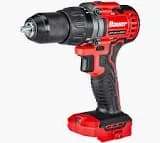 $39.99Product
Bauer 20V Brushless Cordless, 1/2 in. Drill/driver - Tool Only
Searched for
Home ImprovementOct 10, 2026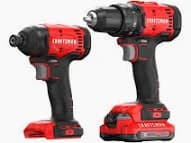 $79Product
CRAFTSMAN V20 20-volt 2 -Tool Power Tool Combo Kit 1 -Batteries Included and Charger Included ) | CMCK201D1
Searched for
Home ImprovementOct 10, 2026


Questions and answers
Can I see in Google Ads when my ad showed in an AI Overview?
No. Google says ads in AI Overviews are reported as Top ads and that Google Ads doesn’t currently offer segmented reporting for them.
Does Search Console show ads in AI Overviews?
No. Its generative AI performance reports count impressions of your pages in AI Overviews, AI Mode and other AI features. They cover organic visibility only.
Do ads still get clicked when an AI Overview is shown?
Yes, according to Seer Interactive: paid CTR on queries with an AI Overview was 16.2% in February 2026, up from 14.6% in January 2025, though below the 21.8% on queries without one.
If my ad shows above and below an AI Overview, is that two top impressions?
Not in prominence metrics. Google counts the most prominent impression and at most one impression per advertiser per search for Impr. (Top) % and Impr. (Abs. Top) %.
How reliable are outside captures of AI Overview ads?
Useful, but they depend on the method. The same search showed 10 ads in our ad capture and none in our answer capture 19 minutes later, so compare like with like and record the date, location and method.
Sources
- About ads and AI Overviews – Google Ads Helpsupport.google.com
- About top and absolute top metrics – Google Ads Helpsupport.google.com
- Use auction insights to compare performance – Google Ads Helpsupport.google.com
- About the search terms report – Google Ads Helpsupport.google.com
- Introducing Search Generative AI performance reports in Search Console – Google Search Central Blogdevelopers.google.com · Jun 3, 2026
- About AI performance insights – Google Merchant Center Helpsupport.google.com
- AIO impact on Google CTR: 2026 update – Seer Interactiveseerinteractive.com · Apr 24, 2026
- Do people click on links in Google AI summaries? – Pew Research Centerpewresearch.org · Jul 22, 2025
- Methodology – AI Overview Ad Libraryaioverviewadlibrary.com
Figures from the library are in our capture (Oct 10–11, 2026, US searches) and describe what we observed, not Google’s full ad inventory. See how the ads are captured. AI Overview Ad Library is independent and not affiliated with Google.